



Olympic Kiln - 28 Raku - Gas Fired
Specifications
Specifications
| Model: |
Olympic 28 Raku |
| Inside Dim: | 28.25" (width) x 27" (depth) |
| Outside Dim: | 48" (width) x 36" (depth) x 78" (height) |
| Brick Thickness: | 3" |
| Max Temp: | Fires to 2350°F |
| BTUS x 1,000: | 70 |
| BTU/HR Total: | 280,000 |
| Gas Pipe Inside Dim: |
3/4" |
| Propane (LP) Water Column Pressure: |
11" |
| Natural Gas (NG) Water Column Pressure: |
7" |
| No. of Burners: | 4 |
| Orifice Size Propane: |
#40 |
| Orifice Size Natural Gas: |
9/64 |
| # of Gallons LP per Cone 10 Firing |
12 |
| Ship Wt: | 480# (Motor Freight) |

Includes:
- FREE SHIPPING in the contiguous US!
- Frame Welded to Firing Chamber
- Peephole Plugs
- Brick for Porthole Covering
- Instruction Manual
- One-year Limited Warranty (The manufacturer's warranty as well as the optional add-on Extended Warranty Protection Plan do not cover a service contractor to provide in-home kiln repairs.)
Olympic Raku & Torchbearer gas kilns bisque, high fire (cone 10), reduce, and raku. Olympic updraft gas kilns are constructed from durable firebrick and are equipped with venturi burner systems to ensure even temperature firings.
Olympic 28 Raku gas kilns are specially designed for raku work by retaining heat in the firing chamber when elevated by the turn of a hand winch, allowing easy access, while trapping the heat in the kiln and away from the operator.
If you have any questions about the operations of an UpDraft kiln click here.
Today potters can create the ancient Japanese technique, raku and its unique beauty, metallic luster, and colors with an Olympic 28 Raku kiln. The raku process involves reducing (starving the oxygen) the glazed raku pottery in combustible materials such as leaves, sawdust, newspaper, etc. When the pieces are ready to take out of the kiln, they are placed in galvanized trash containers with combustible materials and covered. Once the pieces are cooled down, they are removed from the containers, washed, and reveal the rich warm effects of raku.
The burner system includes an ignition to light multiple burners at one point, maintain the flame on each burner and re-ignite any burner that may extinguish. The thermocouple safety shut-off will stop the gas flow if the flame is lost entirely.
Olympic Raku and Torchbearer models come with the frame welded to the firing chamber (Rakus) or with the burners welded onto the kiln stand (Torchbearers), peephole plugs, brick for covering the porthole on top of the kiln lid or chamber during reduction, instruction manual, and warranty card. One-year Limited Kiln warranty.
Lighting Raku Gas Kilns with Ignition System Installed
MAGNETIC VALVE AND THERMOCOUPLE SAFETY SHUT-OFF
The ignition system is used to:
1. Light the multiple burner system from one point
2. Maintain the flame on each burner
3. Re-ignite any burner that may extinguish
The thermocouple safety shut-off is used to stop the gas flow if the flame is lost entirely by the kiln, preventing an unused gas build-up.
OPERATING THE IGNITION SYSTEM & THERMOCOUPLE SAFETY SHUT-OFF
1. Turn on the gas supply.
2. Depress the red button on the top of the magnetic valve for approximately 45 seconds.
3. Using a fire stick, light the pilot bar or ring.
4. The needle valve should be adjusted to allow sufficient gas flow to propagate a flame entirely along with the pilot when it is ignited at any point.
5. Once the pilot is ignited continue to hold the button until the thermocouple sensor is hot and the valve will stay open by itself
6. Turning the gas hand valve on the burner manifold lights the burners.
Electronic Wall Unit Operation
Olympic’s Electronic Wall Units feature programming by cone number or segment method allowing the kiln operator to create their own programs. Each program has eight segments with ramp/hold profiles and a controlled cooling rate. The controller features diagnostic error codes and convenient program review in addition to numerous other options.
The wall unit will operate the gas kiln but it is still a manual process until the kiln reaches a certain temperature. The kiln equipped with a wall unit will come with an operating manual. Read the manual thoroughly and follow programming instructions that best suit your firing requirements.
***Torchbearer or Raku kilns must have an ignition system to equip the kiln with an electronic wall unit controller.
Electronic High Limit Controller
The High Limit Controller - Model 3K 100 - limit, provides a digital reading of the temperature during the firing and shuts the kiln off at a preset temperature. The controller is wall-mounted and requires a 120-volt outlet. The controller may be retrofitted after the purchase of an Olympic Torchbearer or Raku gas kiln. This high limit controller has 3 main modes of operation - STOP, PROGRAMMING, and FIRING. From STOP, pressing "enter" will take you to the PROGRAMMING mode. While in the PROGRAMMING mode, using the arrow keys will adjust the limit setpoint, then pressing "enter" again to save the setting and go to FIRING mode. While in FIRING mode press "enter" to go to STOP mode. Read more on this High Limit Controller here.
Natural vs. Propane Gas
If you plan to use natural gas with your kiln, a large burner is necessary when used on natural gas pressure, you will need 6-8 inches of the water column. If you order your kiln for household natural gas use, it will be equipped this way. The natural gas pipeline that connects to the kiln needs to be one that has a 3/4" inside diameter. If you plan to use propane gas, your tank must have a low-pressure regulator like those on a camper trailer. If an adjustable regulator is being used, about 1/2 pound pressure is necessary. The gas pipeline needs to be a hard line with a ¾” inside diameter. The line should run 20 – 40 ft. long from the propane tank. The larger the tank the better; however, a five (5) gallon tank is the minimum size for the 1827G or 18 Raku, and a 15-gallon tank is a minimum size for the 2327G/23 Raku and 2827G/28 Raku kilns. Due to gas flow, the propane tank may have a tendency to freeze solid. If ice is observed forming on the outside of the tank, water can be run over it to help keep it melted. The tank can also be lowered into a large bucket of warm water. When portable tanks are used for rakuing, keep gas tanks at a safe distance from the kiln.
Gas Kilns Vent Hood
Proper ventilation is required when firing a gas kiln. Gas kilns fired outside may not require a vent. When purchasing a vent it is often best to choose a local HVAC or sheet metal manufacturer to provide metal for the vent, or Olympic Kilns can build one for you. If you choose to create your own vent, contact a heating and cooling supply manufacturer for purchasing a piece of sheet metal. Vent dimensions need to be either round or square in a cone shape and the bottom of the vent needs to be larger than the outside diameter of the kiln. The diameter at the top of the vent needs to be 10”. Vent hood will attach to a double-walled exhaust pipe with a 10” coupling. The double-walled exhaust pipe is required by building conditions or local codes unless otherwise stated. The vent needs to be placed 18” above the kiln when the lid is open or above the kiln frame.
28" Raku Gas-Updraft Furniture Kit
As an option, add a 28" Raku Gas - UpDraft Furniture Kit which includes: 6 – 24” x 12” half round shelves, 6 ea – 3, 6, 9, 12-inch large square posts, 1 lb bag kiln wash, heavy duty gloves, raku tongs.
Get to know your kiln!
Read all about your kiln before you buy. Check out this Olympic Gas Kiln Manual here and explore all about what this kiln has to offer.
Need more information on Gas kiln firing? Check out our Gas Kilns 101 Page!
NOTE: Olympic Gas Kilns are not Massachusetts Board of Examiners approved. Please check the laws in your state before purchase. Kiln Frog, LLC. is not responsible for customer selections and purchases that do not align with current state board guidelines.
Product Description
Product Description
What's Included
What's Included
Key Information
Key Information
More Key Information
More Key Information
Warranty Benefits
Warranty Benefits
Enjoy Peace of Mind
Simple, hassle-free product protection for the products you love.

Protection Plan Coverage & Benefits
Schedule a call with our expert Call Now

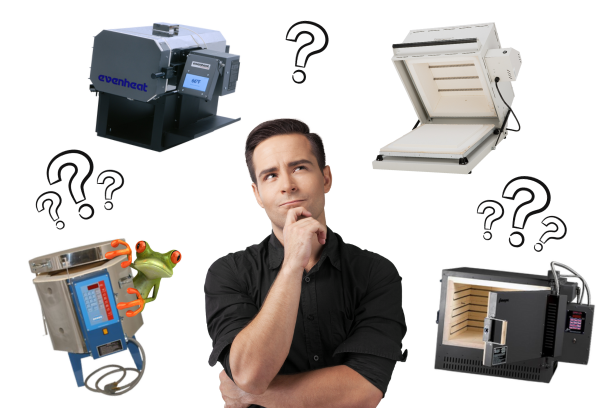

Find your perfect Kiln.
Get personalized kiln recommendations based on your needs by answering a few questions to get your ideal kiln.
Shop Ready To Ship Kilns




Frequently Asked Questions
What other features are important?
What other features are important?
Kilns from every manufacturer are configured with features that allow for different types of functions. These features are available in fiber and brick models. Consider these options:
Top Load Kilns:Ideal for jewelry makers and projects involving powders and frit. Provides good visibility but may be challenging if you’re looking for a deeper kiln or have shorter arms.
Front Load Kilns:Suitable for tasks like enameling and hot manipulations. Offers control and less direct heat, but can be more expensive and require some lifting. This is also true for the weight on the shelf and placing it in front of you.
Clam Shell Kilns:Combines top and front loading, these types of kilns really delivers the best of both worlds; accessibility and free access to your shelf, in addition to ease of loading, and convenience, but may come at a higher cost.
Flip Doors (aka; Punty Doors, Bead Doors, Doggie Doors):Essential for preheating rods and quick bead placement. However, they may affect efficiency and temperature reach.
Windows (aka; quartz portholes):These are not the same as vent holes or peep holes. Optional quartz portholes for monitoring projects at peak temperatures, especially helpful for slumping, draping, or drop ring project. A window will also allow you to check the progress of a pot melt/aperture pour or screen melt.
What to consider when buying a kiln?
What to consider when buying a kiln?
What kind of projects would you like to do?
The type, size, and kiln features you require are determined by the projects you choose. This covers things like firing techniques, loading systems, building components, voltage, controllers, and more. Your response may help to clarify your preferences, but you should also consider how well your preferences match with your current circumstances.
Where will you be locating the kiln?
The kind, dimension, and features of your kiln are influenced by where it is. Environment, power supply, safety, and space availability are all important considerations. Your desires might not always line up perfectly with the constraints of your surroundings, this is where we as artists must become creative problem solvers in an effort to overcome our environmental constraints.
We're here to support you. Please reach out if you need any additional advice!
Where should I place my kiln?
Where should I place my kiln?
Here are some basic guidelines about locating your kiln:
- Make sure you have adequate space... at least 12 - 18 inches of space between the kiln and the wall. (However, for operator comfort, allow room to walk around the kiln if maintenance is required.) It is recommended that the unit be placed on a stand on top of flame-resistant flooring like a cement floor or board.
- Make sure the area is really clean - remove all flammable or combustible materials such as curtains, plastics, rags, paper, packing materials, etc. from the area surrounding the kiln.
- Make sure the area is well ventilated – proper air exchange is necessary for you kiln to last a long time. Heat from the kiln and outside air can accumulate in restricted areas above both gas and electric kilns.
- Make sure that the heat has somewhere to go, and is replaced by fresh cooler air. Set up a fan near the area, or open a window to ensure good air exchange. Check all local requirements or codes before installation.
IMPORTANT: Always read your owners manual and follow you kiln manufacturer's instructions.Plugs & ElectricityWhat type of plug do I need?
What type of plug do I need?
What type of plug do I need?
Each kiln model described on our website will identify which of the following power supply receptacles is used with that model. They are identified by voltage and amperage as well as the NEMA designation. Those described as "direct wire" do not use a receptacle, instead, they are permanently wired.
Download the NEMA Configuration Chart!


When will my kiln or equipment ship?
When will my kiln or equipment ship?
Many kilns are built to order, and production times vary by manufacturer, model, voltage, customization, and current parts availability. Ready-to-ship products may ship faster, while custom or larger equipment may require additional production time.
Care and Maintenance
Care and Maintenance
Proper kiln maintenance is essential for preventing downtime and costly repairs. Here's a checklist to help you keep your kiln in top shape:
Before Every Firing:
- Inspect: Check inside your kiln for any unwanted visitors, moisture, or debris. Ensure your pet-friendly area is clean to prevent odorous surprises.
- Vacuum: Turn off the power and use a vacuum with a HEPA filter to clean the interior, removing dust and residue that could affect your glass during firing.
- Clean: Remove flammable materials from the area around the kiln.
- Inspect Elements: Ensure coils/elements are in place, free of debris, and securely fastened. Check thermocouples and tighten lid screws as needed.
- Check for Cracks: Examine your shelf for cracks and address them to prevent issues during firing.
- Power Up: Turn the power back on and ensure the kiln registers the correct room temperature.
Monthly Maintenance:
- Lid Check Up: Periodically tighten the lid band as the lid expands and contracts during firings. Most kiln lids are manufactured with a protective coating on the "hot side" or inside. This coating was applied to optimize the heat insulation of the lid, as well as to prevent brick dust from falling into the kiln. Address cosmetic lid cracks, and for structural issues, consult the manufacturer during the warranty period. If you are in the warranty period, DO NOT ATTEMPT TO REPAIR THIS without calling the manufacturer, as this could void your warranty.
- Body Check Up: The only things inside of your kiln should be your elements, pins, brick, kiln furniture/posts and kiln washed shelves. Remove any non-essential materials such as (glaze, slip, clay, glass, silica sand) from the sidewalls to protect them and the heating elements. Be cautious when using kiln cement to repair cracks, and contact the manufacturer if needed during the warranty period. If you are in the warranty period, DO NOT ATTEMPT TO REPAIR THIS without calling the manufacturer, as this could void your warranty.
- Inspect Elements: Look for signs of wear such as rust, bulging, or thinning/thickening areas. Elements wear out with usage and may need replacement. If you find it necessary to change out your elements, make sure you speak to the manufacturer to determine the appropriate element size for your kiln. Please refer to your operator’s manual for the discussion and photo's of "Element Replacement".
- Electrical Check Up: Regularly examine the power cable, receptacle, and plug for discoloration, heat, corrosion, or loose connections. Address any electrical issues promptly, and consult the manufacturer if needed, especially during the warranty period. If you are in the warranty period, DO NOT ATTEMPT TO REPAIR THIS without calling the manufacturer, as this could void your warranty.
Regular maintenance will help your kiln perform efficiently and extend its lifespan.
What are Safety Precautions?
What are Safety Precautions?
Kilns are as safe as any other electrical appliance when used under normal and proper operating conditions. All kiln safety precautions should always be observed.
- Use common sense while installing and using your kiln.
- Do not install your kiln closer than 12" from any surface, or closer than 18” from a combustible surface. Remove all potentially combustible materials from the kiln area.
- Make sure all electrical specifications are followed. Use correct voltage, wire size and circuit breaker. Make sure all connections are tight. Avoid using aluminum wire. Always use the proper grounded receptacle. A qualified electrician or service person should be used for all electrical service or repairs.
- Install in covered, walled in, well-ventilated area. Fumes from the ware should be vented to the outside.
- Avoid moisture. Do not allow your kiln to get wet. Never use your kiln outside!
- Always keep children and unsupervised personnel away. Surface will get hot and a burn could result.
- Fire glass only to the manufacturers recommended firing temperature. Improper fire temperatures could result in damage to your kiln. Do not operate glass kilns over the maximum temperature rating.
- Replace any worn or defective parts with ONLY genuine replacement parts.
- Unplug kiln when not in use and if there is an electrical storm.
- Unplug the kiln before servicing or vacuuming.
- Do not drop or slam the lid shut.
- Let the kiln cool to room temperature before opening the lid.
Can I return or cancel my order?
Can I return or cancel my order?
Returns and cancellations may be subject to manufacturer approval, timing restrictions, restocking fees, and shipping charges. Before returning any item, you must contact Kiln Frog for authorization and instructions. Cancellation requests must be submitted in writing.
Do you offer a Best Price Promise?
Do you offer a Best Price Promise?
Yes. If you find a better eligible price before purchase or within 48 hours after purchase, contact Kiln Frog by phone, email, chat, or text. Pricing must include comparable shipping and delivery fees and must come from an authorized source.
Do you accept purchase orders?
Do you accept purchase orders?
Kiln Frog accepts purchase orders from qualifying schools, colleges, universities, corporations, and institutions with approved credit arrangements or accepted Dun & Bradstreet ratings. Purchase orders must include product details, quantities, pricing, payment terms, and delivery requirements.
Do you offer financing?
Do you offer financing?
Consumer financing and commercial financing options may be available. Qualified customers can explore monthly payment options or equipment financing depending on their purchase type and approval status.
Need help choosing the right kiln?
Need help choosing the right kiln?
Our team is here to help. Contact Kiln Frog by phone, email, chat, or text for help with product selection, specifications, production timelines, delivery questions, or quote requests.